 Chromis
One-tap background removal
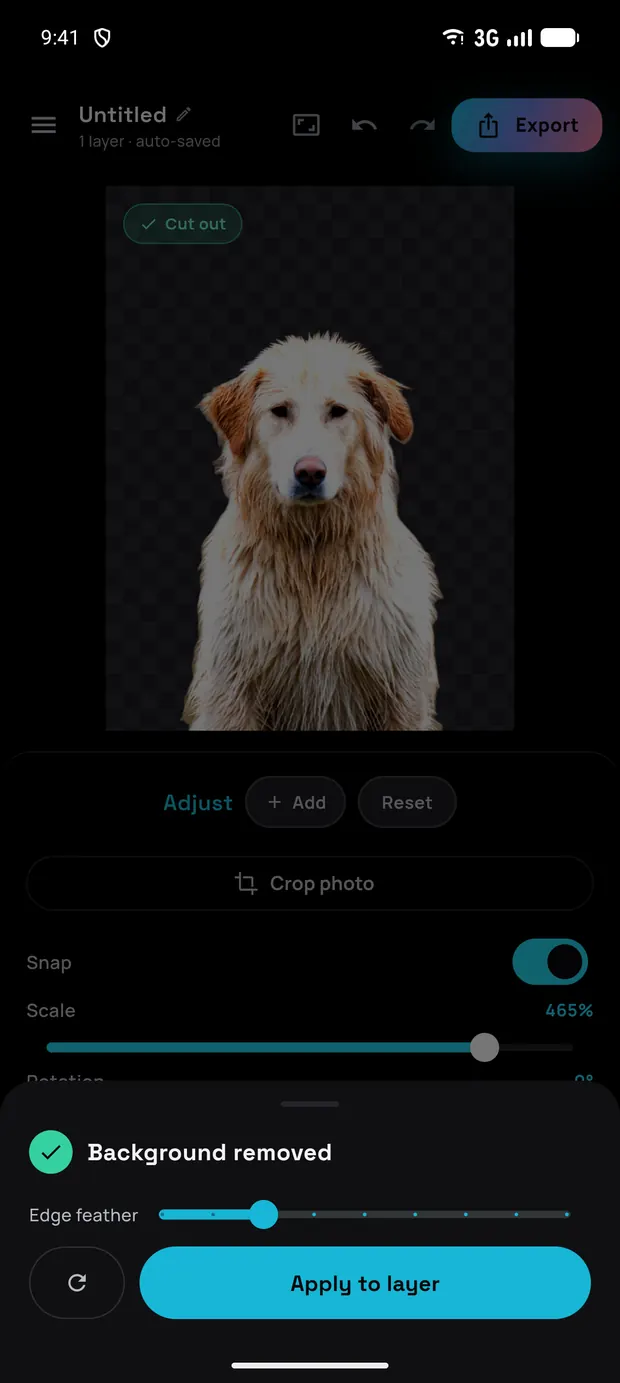
On-device AI finds your subject and cuts it out cleanly - Google ML Kit with a bundled U²-Netp model as a universal fallback.
Free · On-device AI · Android
Cut out subjects, remove what you didn't want in the shot, then stack layers with filters, shadows and blend modes - powered by AI that runs entirely on your phone.
Free, ad-supported · one-time upgrade removes ads · no account, ever.


New · Object removal
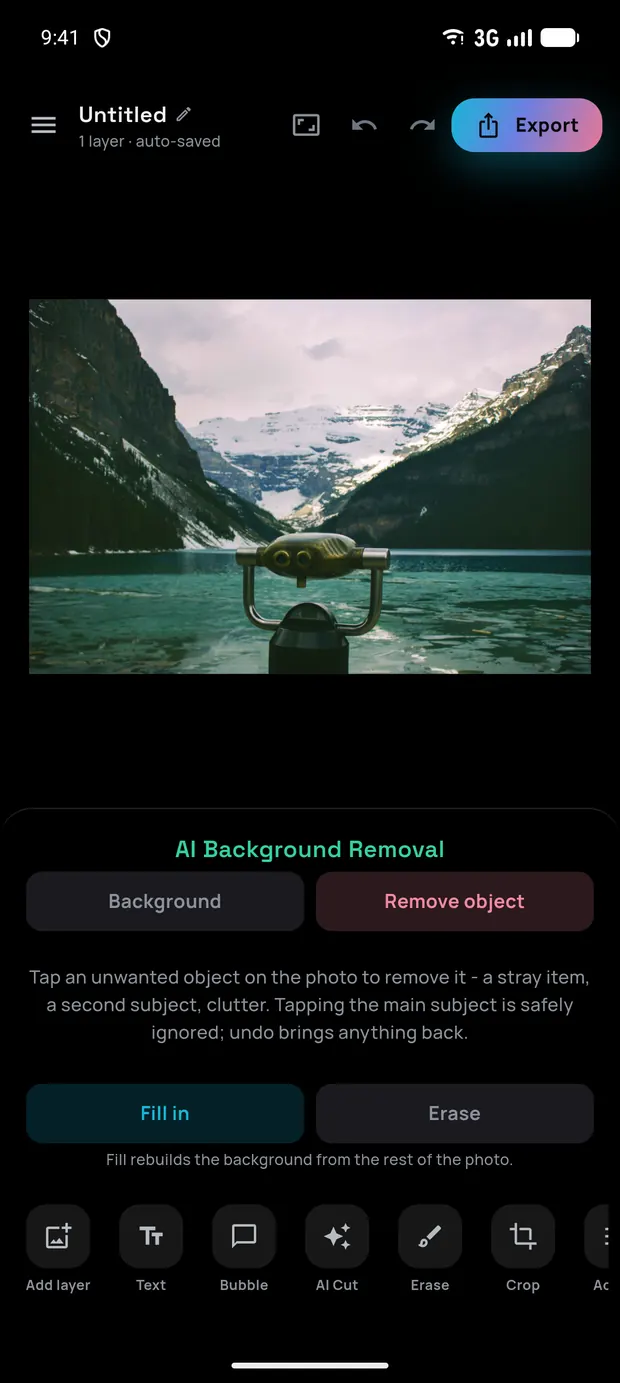
Tap the thing you wish wasn't in the shot - a bin, a sign, a stranger at the edge of the frame - and it goes. The question most editors never answer is what goes there, and a transparent hole is not an answer. Chromis rebuilds the background behind it, on your phone.
The chooser sits at the top of the panel and Fill in is the default, because "remove this" means a closed background to nearly everybody. Erase is still one tap away when you actually want transparency.
Fill runs a 27 MB image-completion network that ships inside the app, so it works in flight mode. Where that can't help it falls back to a content-aware fill that always runs - the feature degrades instead of disappearing.
A tap is turned into a selection by MobileSAM, so you get the whole object rather than a blob the size of your fingertip. Tapping your main subject is safely ignored, and undo brings anything back.
14 looks, one tap
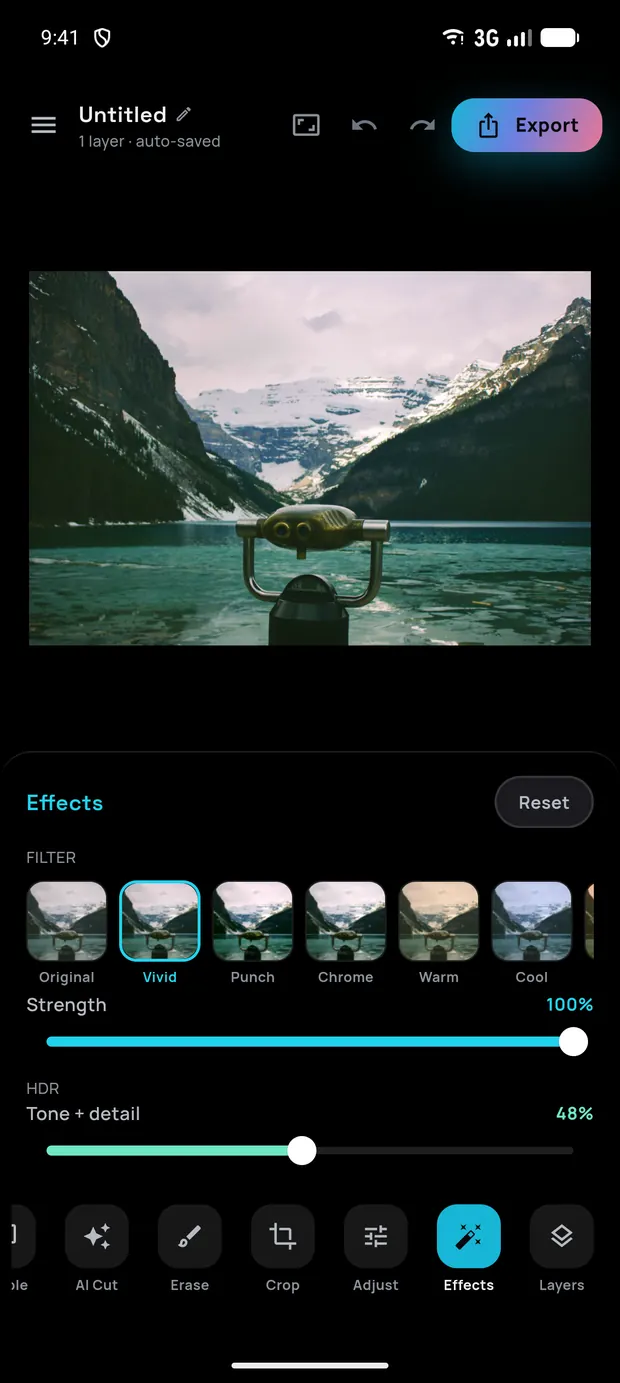
These aren't mock-ups. Every look below is the app's own colour transform, lifted straight out of the source and handed to your browser - so what you pick here is exactly what your photo gets.

Every look keeps its own strength slider, and none of them touch your original pixels - switch or undo at any time.
Beyond colour
Vignette, HDR, drop shadow and contour are painted rather than tinted, and they stack on top of any filter. Shadow and contour go on any layer; vignette and HDR reach into pixels, so those two belong to a photo.

 BeforeVignette
Nine colours, with size and softness. On a cut-out it follows the subject's silhouette instead of shading a rectangle behind it.

 BeforeHDR 100%
Lifts shadows, holds the highlights, then adds local contrast - the look a phone camera's HDR mode gives you, on a slider.
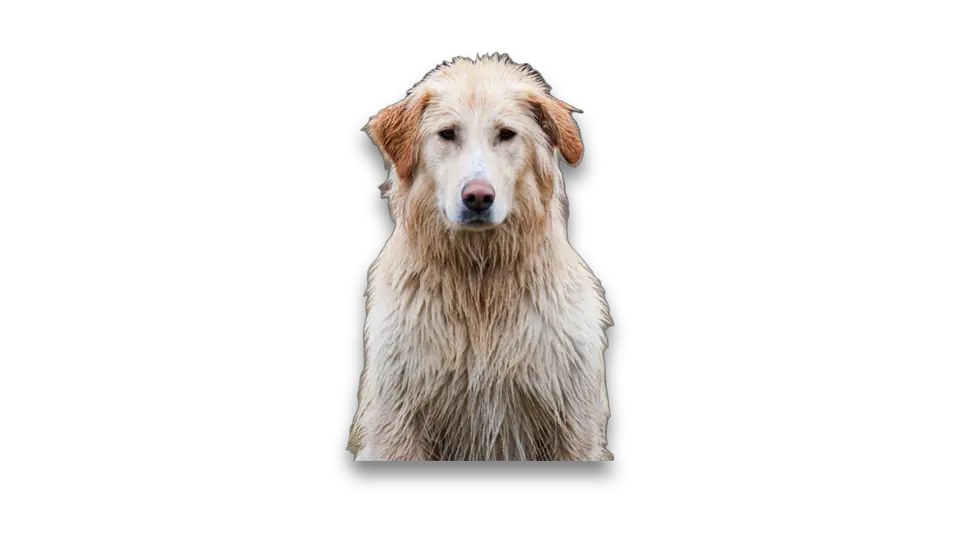
Direction, distance, blur, spread, colour and opacity. It travels with the layer, so a rotated sticker keeps its shadow.
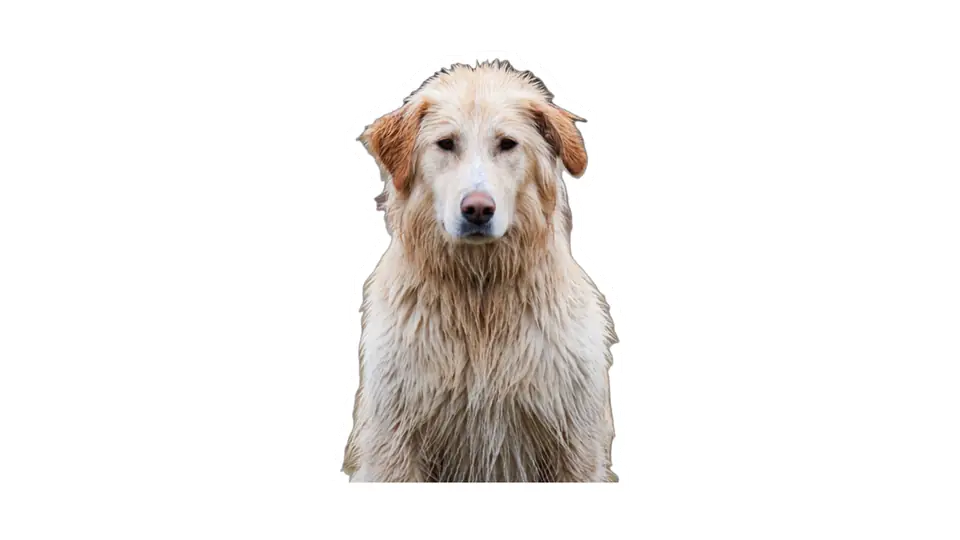
A stroke grown out of the layer's own silhouette - the die-cut sticker edge. On text, the same control gives you an outline.
One tap, real AI
The before/after at the top is a genuine result from the app's on-device model - no cloud, no touch-ups. Once your subject is free, put it on any backdrop or export it as a transparent PNG.
 Sunset
 Pop
Pop Transparent PNG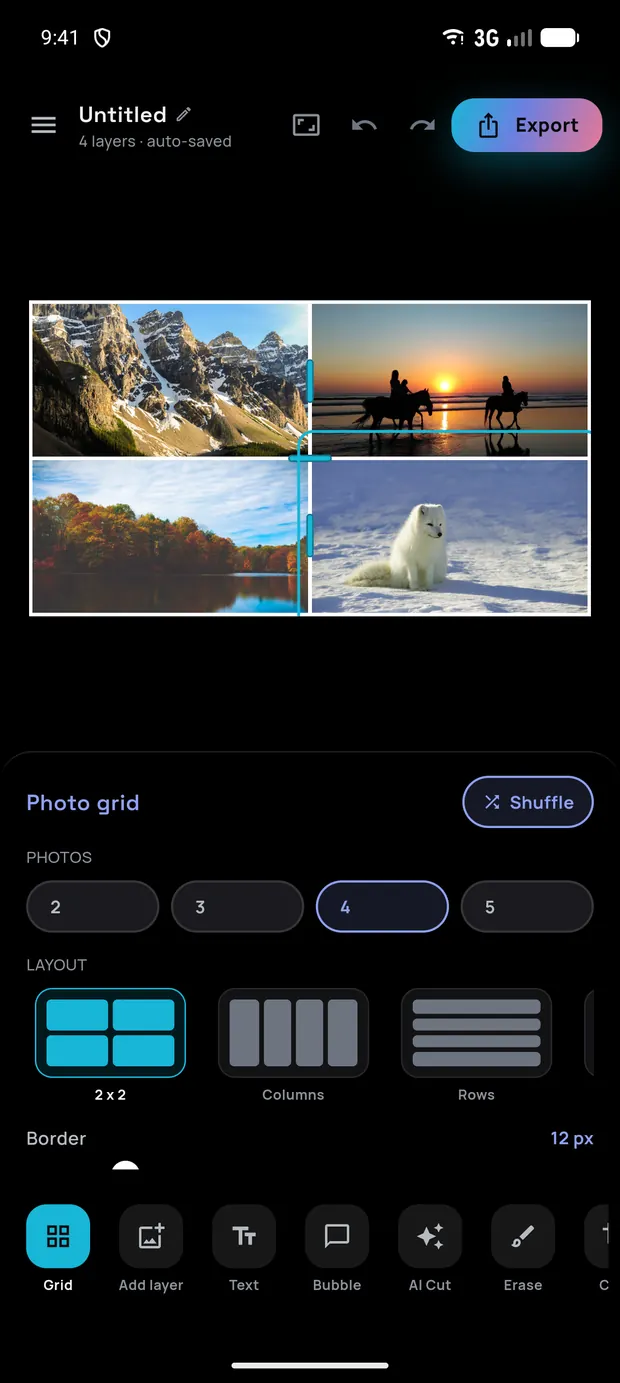
Photo grid
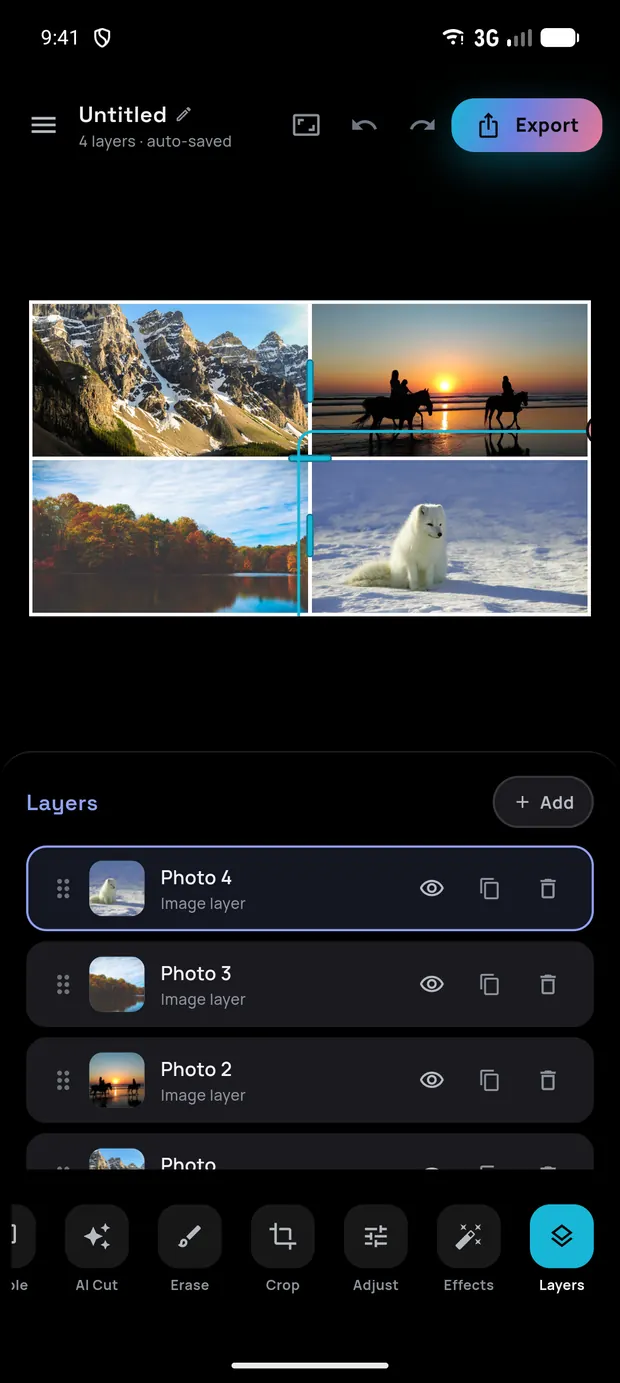
A grid is a partition of the canvas, not a separate kind of document - so a cell is just a window onto the same editor. Cut out a subject, stack a filter, drop in text: every tool works inside a cell exactly as it does anywhere else.
Four ways to place two photos, four for three, five each for four and five - named the way you'd describe them: Side by side, Big left, 2 over 3. Swap layout at the same count and photo N stays in cell N.
Drag one and it trades space between exactly those two neighbours - every other cell keeps its rect. No cell shrinks past 12% of its split, and the whole drag is a single undo.
Gaps and the outer frame are the fill showing through, not a stroke laid over your photos. One Border slider from 0 to 80 px sets both, Corners runs 0 to 60 px, and there are nine preset colours.
Count, layout, border, corners and colour stay in the Grid panel for the life of the project. Dropping to fewer photos does remove the ones in the cells that go - and one undo brings them back.
New · Snap & place
Drag a layer and it settles onto the nearest alignment - the edges and centres of every other layer, and of the canvas itself - with a guide line showing exactly what it caught. Pinch instead and it will match a neighbour's size as well; a plain drag never resizes anything. Turn the toggle off and nothing moves but your finger.
Alignment is measured along the layer's own axes, not the screen's, so two stickers at the same angle can be made genuinely flush. Carry one up against a neighbour a couple of degrees off and it takes that angle.
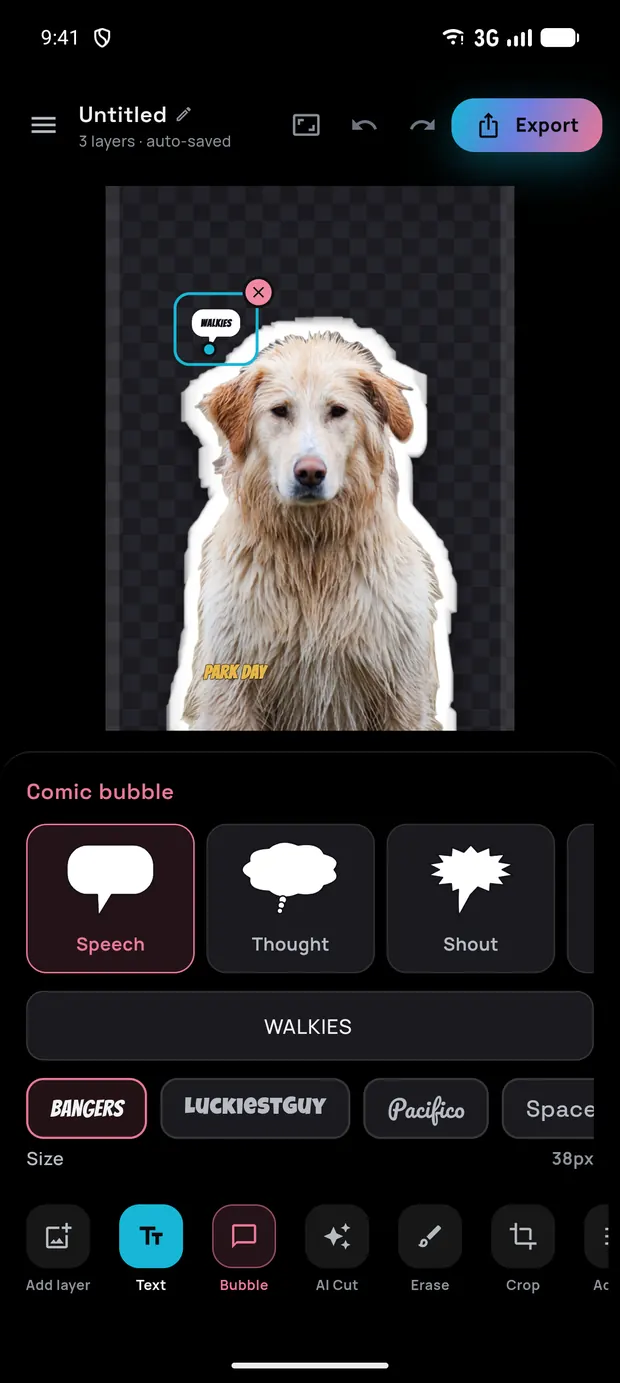
Scale, Rotation, Horizontal and Vertical now drive any layer - a caption, a speech bubble, a photo. A sticker pinched down to a speck used to be smaller than a fingertip and stuck that way; now it is a slider.
Rotation snaps to straight over the last couple of degrees, both placement sliders snap to dead centre, and every one of them is a single undo step.
Everything in one editor
From a one-tap cut-out to layered compositions with filters, blend modes and collages - every tool runs locally on your device.
On-device AI finds your subject and cuts it out cleanly - Google ML Kit with a bundled U²-Netp model as a universal fallback.
Point at anything you don't want - a photobomber, a sign, a stray leash - and a bundled generative model rebuilds the background behind it.
One-tap looks with a strength slider, an HDR pass that lifts shadows and local contrast, and a vignette in any of nine colours.
Give any layer a directional drop shadow and a die-cut contour, then composite it with 16 blend modes - Multiply through Luminosity.
Stack, move, scale and rotate freely. Merge two layers or flatten the lot into one photo - each a single undo step.
Two to five photos across 18 layouts. Drag the dividers, restyle the border, and keep using every other tool inside a cell.
Captions in bold display fonts with their own outline and shadow, plus rotatable, re-tailed speech bubbles.
Fine-tune light and colour, brush away stray pixels by hand, and crop the canvas freeform or to any ratio.
Layers settle onto each other's edges and centres with a guide showing the catch, and a pinch matches size too - and Scale, Rotation and the two placement sliders drive a caption or a bubble, not just a photo.
Pure black on OLED so the pixels are genuinely off, pure white that stays readable in daylight. Follows your phone, or pin either one.
English, Polish, German, Spanish, French and Czech - the whole app, not just the menus. Follows your phone or set it in Settings.
Save or share as a transparent PNG, JPG or WebP at full size or a fraction of it - straight to your gallery or any app.

Why Chromis
Background removal, object erase, adjustments - it all happens on your device. Your photos never leave your phone unless you choose to share them.
Every editing tool is free, supported by ads. Prefer a clean canvas? One small one-time purchase removes ads for good.
No sign-up and no login. Because the AI runs locally, editing keeps working even without a connection.
Take a look
Filters, collages, layers and one-tap AI - all running on your phone.
Fill in, or erase
Filters, HDR & vignette
Collages with draggable dividers
One tap, then snap it into place
Stack, merge & flatten
Captions and comic shapes

In landscape the dock becomes a rail down the left edge and the tool panel folds away, so the photo gets the room it deserves. Tablets get the same layout with a wider canvas - this is a 10-inch one.
Good to know
No. Background removal, object erase and every other edit run on your device. A photo only leaves your phone if you explicitly share or export it. See the Privacy Policy for details.
Yes - all editing tools are free and supported by ads. If you'd rather not see ads, a single one-time in-app purchase removes them permanently.
Almost never. The models that do the work ship inside the app - the U²-Netp cut-out, the tap-to-select network and the generative fill - so removing a background or an object works in flight mode. The one exception is the other cut-out engine, Android's own ML Kit, which fetches its model through Play services the first time it runs; the bundled one is there for exactly that case, and the app falls back to it. Otherwise a connection is for ads, purchases and the consent form.
Fill in rebuilds the background where the object was, using the rest of the photo, so removing someone from a beach leaves beach. Erase cuts the object to transparency instead, which is what you want when you're about to drop the result onto a different backdrop. The chooser is at the top of the Remove object panel and Fill in is the default; either way, undo brings the object back.
English, Polish, German, Spanish, French and Czech - the whole interface, not just the menus. It follows your phone's language by default, and Settings has a picker if you'd rather pin one. Each language is listed in its own script, so you can always find your way back.
Yes, and a dark one, and it follows your phone unless you pin either in Settings. Dark is pure black rather than a dark grey, which on an OLED screen means those pixels are genuinely switched off; light is pure white so it stays readable in daylight.
Yes. The 14 looks in the gallery above are the app's own colour matrices, exported from the source and applied by your browser - not screenshots or approximations. A build step regenerates them from the code, and a test renders every look both ways and compares the pixels, so the page can't drift from the app.
Yes. Photo count, layout, border width, corner radius and border colour all stay in the Grid panel for the life of the project. Swapping to another layout at the same photo count keeps each photo in its cell and re-fits it to the new shape. Dropping to a lower count removes the photos in the cells that go, as one undoable step.
Both. Turn the phone and the tool dock becomes a rail down the left edge with a folding panel beside it, so the photo gets the width. Tablets get the same layout with a larger canvas.
Android 8.0 (Oreo) and newer. Tap-to-select object removal asks for 2.5 GB of RAM or more - under that the app declines to offer it rather than risk being killed mid-edit, and the simpler selection still works. Background removal runs everywhere.
Chromis is Android-first. An iOS version may follow - let us know if you'd like it.
Get in touch
Questions, bugs or feature ideas? Send a message - we read every one.

Object removal, cut-outs, filters, layers and collages - free, on-device and private.
Get it onGoogle Play